
Reconstruct Windham Former Owners
A backward chain is a timeline of recorded transfers, not a loose pile of names. Windham town posts deep deed images online. The other towns answer to their own clerks. Coverage varies from town to town. Use the current owner of record only to locate the newest deed, then let each recorded transfer point back to the one before it.
| Transfer Date | Grantor to Grantee | Deed Type | Book/Page |
|---|---|---|---|
| Newest recording | Prior owner to current grantee | As stated in the index and deed | Copy from latest deed |
| Prior acquisition | Earlier grantor to that former owner | Warranty, quitclaim, fiduciary, or other type | Follow prior-instrument reference |
| Earlier book era | Repeat with spelling and capacity variants | Read the signed image | Switch to volume and page |
Add a row only after reading the source. Keep the deed's execution and recording dates separate, and capture the legal description, instrument number, and source URL in your working notes. An index hit without an image stays index-only. Request a copy instead of assuming the details.
Walk Windham's Deed Chain Backward
Windham SearchIQS covers Party 1 and Party 2, dates, document groups, descriptions, book and page, instrument numbers, and case fields. Open a wide date range first. Read the deed image. OCR can misread names, acreage, covenant wording, and a grantee's legal capacity.
- Find the current acquisition deed with the present owner as grantee.
- Read the grantor and prior-instrument reference in the signed image.
- Search that grantor as a grantee to locate the earlier acquisition.
- Repeat, matching the tract and switching to index books when needed.
- Grantor and grantee
- The transferring and receiving parties named in a deed.
- Chain of title
- The linked sequence of transfers affecting the tract.
- Reverse index
- An index used to find when a named party acquired land.
- Quitclaim deed
- A transfer of the grantor's stated interest without a title warranty.
- Warranty deed
- A deed carrying the warranties stated in the instrument.
Bridge Windham's Digital Cutover
The indexed images start November 24, 1965. Listed index books cover 1706 through 1977. Older deed-book images reach back to August 3, 1687. Image availability is not the same as a searchable name index. Remember that distinction. A former owner can sit plainly in a scanned volume even when a modern party search returns nothing at all. Open the SearchIQS historical-document help before moving into the book era, then find the grantor or grantee in the handwritten or typed index, note the volume and page, and pull that deed image.
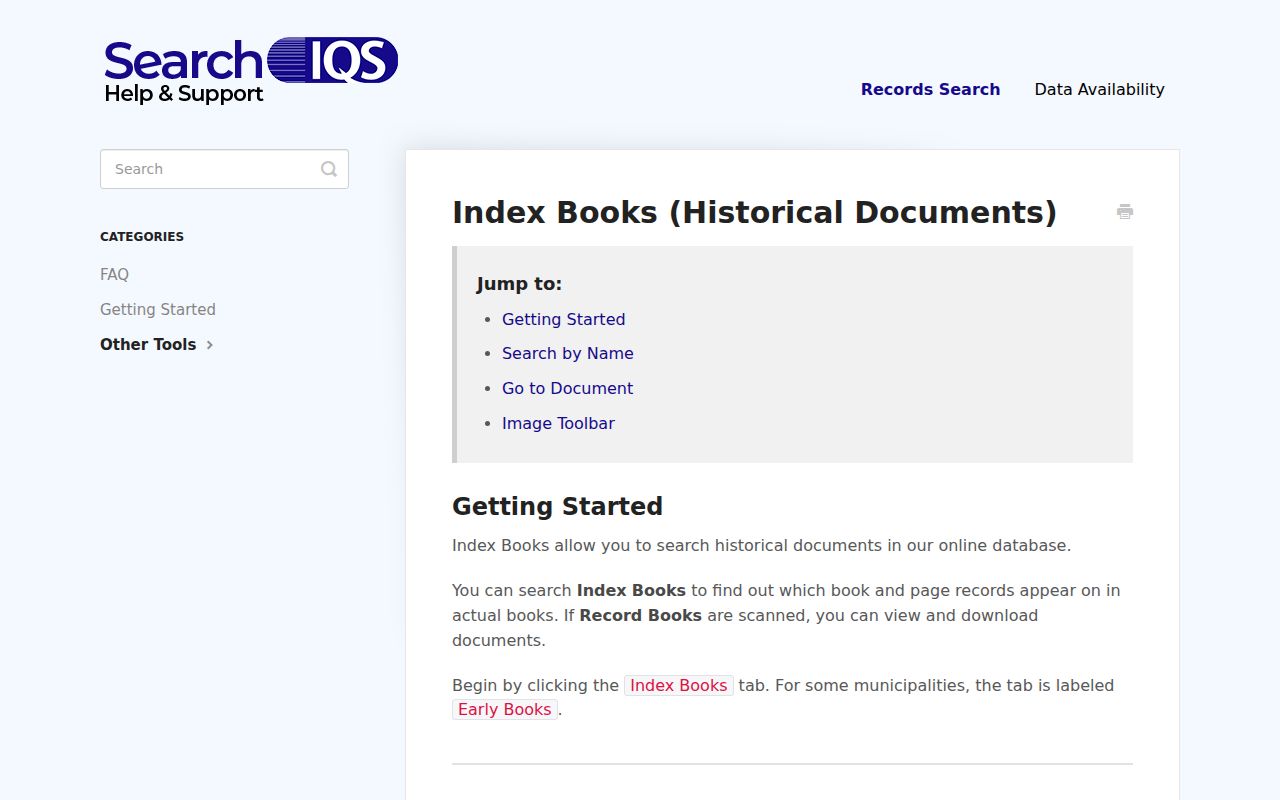
That index bridges a name to an old volume. These dates cover Windham town only, not every town in the geographic county, so check each clerk's own holdings.
Follow Windham Prior References
Deeds often cite the prior book and page. That reference beats surname guessing. It is faster and safer. Compare the grantee's capacity, consideration, parcel description, adjoining owners, map reference, and stated interest before trusting the link. Mortgages, liens, releases, and easements can sit near a deed without moving ownership. Classify each instrument. Search spelling variants, middle initials, marital wording, former names, corporate suffixes, trust titles, and estate roles, since names drift between transfers. When two people share a name, the property description and prior reference settle the match.
Note: A document recorded near a deed date is not automatically an ownership transfer; read its type and operative language.
Trace Windham Estate Owners
Estate language surfaces former owners in unexpected places. Executor, administrator, trustee, conservator, and estate wording all point to a probate event behind a deed. Search the decedent and each fiduciary capacity. Then connect the probate order to the recorded deed. The court case alone is not a land transfer. The Plainfield-Killingly Probate District has served Canterbury, Killingly, Plainfield, and Sterling since 2011. Older estates follow older district lines. Probate clerks, the Connecticut State Library, and FamilySearch can bridge the gap when a deed names an estate but the court event is not online. One Putnam catalog entry even tucks cemetery burial-plot purchases into a land-record volume. Do not slot a plot purchase into a house parcel's chain unless the description proves it is the same tract.
Match Old Windham Property Descriptions
In an old chain, the legal description wins. Compare map numbers. Also weigh metes and bounds, adjoining owners, easements, rights-of-way, and subdivision lot numbers. Parcels shift shape. A current assessor parcel may be a split or recombination of an earlier deed tract, while one old tract can become several parcels or several lots can merge into one tax account. Willimantic's 1983 consolidation with Windham adds another clue. A city-era deed or directory may say Willimantic while current land custody sits with the Windham Town Clerk. Road and industrial corridor names vary too. Search both old and modern forms, but connect them through the deed description and the recorded map.
Access Windham Ownership Books
Online SearchIQS is one channel among several. The Windham Town Clerk holds in-office land records, index books, and recorded maps. Copy requests should name the party, date, town, book and page or instrument, and parcel description. Ask the clerk about certification and copy charges. The other fourteen towns keep their own land records, with different portals, dates, and request methods. Older deed and probate material also lives on microfilm and in catalogs at FamilySearch and the Connecticut State Library. Local libraries, historical societies, directories, and newspapers can explain an address or a family name. They corroborate, not replace, the recorded deed. A Connecticut FOIA request can reach retained agency files. It is no substitute for the statutory land-record system.
Measure Windham Ownership Time Depth
Depth varies by town. Windham's own records run remarkably far back. Listed images date to 1687, and grantor-grantee index books begin in 1706. Neighbors' volumes may start much later. Every parcel chain in Windham County depends on the town and the books that survived. The quality of the indexes matters too, as does how well the property description holds up over time. A gap in the online images signals missing coverage. It never proves a transfer failed to happen.
Work the chain until you reach the historical point you wanted. You may instead reach the earliest surviving town volume, or a genuine dead end. Write down exactly where it stops. For a binding title conclusion, bring in a qualified professional. That person can weigh every interest and exception. A reconstructed owner list helps with house history, estate work, and purchase diligence. But it is not a title opinion.
Historical cutoff. Windham's searchable index and image eras differ. Older former owners require index books, deed volumes, clerk help, and sometimes archives.
Other records can back up the deed chain without standing in for it. A recorded plat may reveal how a lot came into being. An old tax roll can pin a name to a parcel in a specific year. Directories and newspapers tie people to street labels. Cite each source only for what it truly shows.
Chains also branch. One deed might move a fractional share or reserve an easement. It might create a life estate or cover several tracts at once. Later fiduciary deeds and releases can touch different interests entirely. Follow the legal estate actually conveyed. Do not merely rely on the names printed at the top of the instrument.
Close out with a gap log. List unreadable pages and missing images. Note ambiguous same-name matches, uncertain parcel splits, and probate files still to pull. A candid log beats a seamless owner list the sources cannot support.
Audit a Windham Former-Owner Chain
Test the chain in both directions. Every grantee should reappear later as grantor of the same tract or a clearly described piece of it. Book and page references must link, along with prior-instrument citations. A deceased owner calls for the probate event and any fiduciary capacity. When an entity renames itself, state business name history explains the shift.
Flag instruments that affect title rather than transfer it. Mortgages, assignments, releases, liens, lis pendens, easements, restrictions, declarations, and maps supply context, but none belongs in a former-owner list unless its operative language conveyed ownership. A foreclosure deed closes a court sequence. The lis pendens before it merely gave notice.
Read the signed recorded image whenever you can. OCR text and index abstracts are fine for locating documents, yet they distort names, acreage, covenants, and capacity. No image available? Use the clerk's in-office or copy channel instead. Keep any unverified result labeled index-only until the deed itself is read.
Separate fact from inference in the final timeline. Recorded parties and dates are facts drawn from cited instruments. A renamed street, a parcel split, a family link, or succession between near-identical names is inference, supported by maps, probate files, directories, or newspapers. Say which is which. A careful gap beats an invented former owner every time.